I Just Made Luna My Daily Driver — Here's Why Terra Doesn't Make Sense Anymore
I'm switching to Luna as my daily driver.
And before you ask — no, this isn't a hot take. It's math.
The New Equation
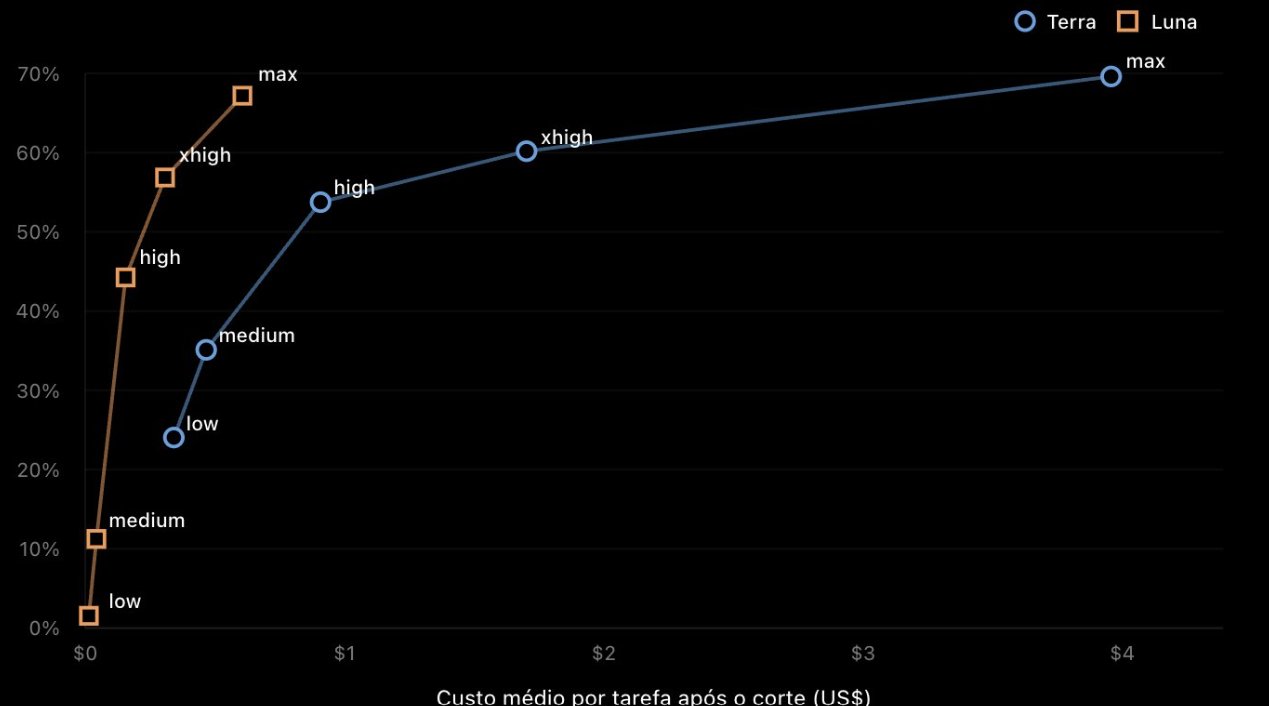
The new Luna pricing + the introduction of Max reasoning changed everything. Luna at $0.053/task with Max reasoning enabled outperforms Sonnet 5 on benchmark tasks. It's not quite at Opus level — but here's the thing: for 90% of what I'm actually doing, I don't need Opus level.
The gap between Luna with Max reasoning and Opus is real but narrow. The gap between what I need and what Sonnet 5 was delivering was real but I was paying Sonnet 5 prices for it.
That math doesn't work anymore.
Why Terra Doesn't Make Sense
Here's where it gets uncomfortable for Terra.
Terra exists in the middle — between Luna and Sol. It's positioned as the mid-tier option. But with the new Luna pricing and the Max reasoning addition, the gap between Luna and Terra is now negligible in terms of capability while the price difference is massive.
Luna with Max reasoning vs Terra: the performance difference is small enough that for most tasks you genuinely won't notice. The price difference is large enough that you will notice it on your monthly bill.
Terra was a reasonable choice when Luna was more expensive. At $0.053/task with Max reasoning, Luna has absorbed the Terra value proposition. Terra becomes the model you use when Luna hits its ceiling — which for daily driver use is going to be less often than you think.
My New Stack
Here's what I'm actually doing:
Daily driver: Luna with Max reasoning. Drafting, coding, research, iteration, analysis — all of it. $0.053/task. Beats Sonnet 5 on benchmarks. For my daily workflow, this is the obvious call.
When Luna hits its ceiling: Sol. Complex multi-step reasoning, novel problems, the kind of work where I genuinely need the frontier. Sol is still the right call.
Frontier for the hardest stuff: Opus. And here's where I keep Claude or Opus around — for the edge cases. Novel mathematical work, genuinely complex scientific reasoning, the 5–10% of tasks where the absolute ceiling matters. For everything else: Luna.
Competition Is Doing Something
I keep thinking about this: the reason Luna pricing dropped 80%, the reason Max reasoning exists, the reason the competition is so fierce right now — is that the market is pushing back.
Companies like Anthropic, Google, DeepSeek — they're all pushing OpenAI to stay sharp. The competition means better deals for us. OpenAI dropping Luna by 80% isn't generosity. It's a response to the fact that if they don't, users have real alternatives that are now genuinely competitive.
This is what competition looks like when it works. Premium models getting better and cheaper because the alternatives are real. I think we forget how unusual this is — we're living through a period where the most powerful AI models are getting dramatically cheaper at a pace that makes annual subscription pricing feel arbitrary.
It's a great time to be an AI user.
The Bottom Line for Your Stack
If you're paying for Claude, Gemini, or any other subscription — the Luna pricing drop makes it almost a no-brainer to shift your daily usage to ChatGPT. The economics are overwhelming.
The one exception: if you're doing work where Claude with Opus genuinely matters — complex reasoning, the hardest problems, work where the frontier capability is the actual requirement — keep it for that. But for 90% of what most people are actually doing with AI:
Luna is more than capable. Max reasoning makes it better than Sonnet 5. And at $0.053/task, it's not even close in terms of value.
I'm making the switch. The only question is why I didn't do it sooner.