Xi Just Called Out America's AI Strategy. He's Not Wrong.

Xi Jinping stood on the biggest AI stage in China last week and said the quiet part loud.
"AI development should not be a solo performance by a single country but a symphony of global collaboration."
He never named the United States. He didn't need to. Everyone in that room in Shanghai — and everyone covering it — knew exactly who he was talking about.
The open-source contrast is real
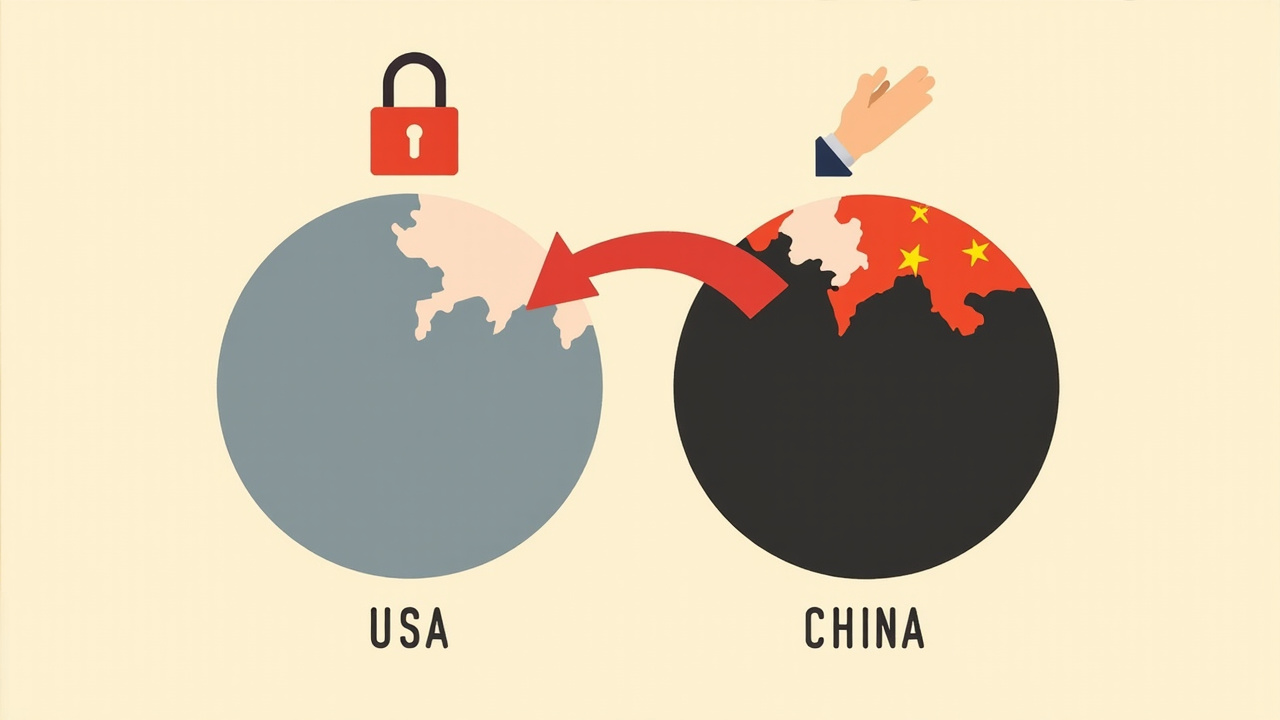
American frontier labs have made a choice: their most powerful models stay behind closed doors. OpenAI, despite the name, runs closed models. Anthropic does too. Meta is the notable exception on the American side — Llama is genuinely open-source — but the flagship labs that set the pace have mostly bet on proprietary control.
China is making the opposite bet. On the same day Xi spoke, Moonshot unveiled Kimi K3, calling it the world's largest open AI model by parameter count. Alongside DeepSeek's earlier emergence and Z.ai's GLM 5.2, this is no longer a story of China chasing America's lead. It's a story of parallel strategies diverging in real time.
Xi's pitch to developing nations is simple: come here if you want open access, not a subscription to America's moat.
The irony Beijing is comfortable with
Here's what makes this complicated: China isn't actually open. Reuters reported this month that Beijing is weighing restrictions on overseas access to some of its own top models. The world's most prominent advocate for "open-source AI" is also quietly preparing to wall off its best models when it suits national security.
But here's the thing — that irony doesn't actually undermine the pitch to the Global South. Countries that have watched American labs gatekeep the most capable models, restrict chip exports, and set AI governance agendas without consultation are genuinely receptive to an alternative. Being offered a flawed open-source champion is still better than being offered nothing.
"China is ready to be more open, take more practical actions, and assume a more visionary perspective."
That was Xi. Whether you believe him or not, that's the framing he's exporting.
What Xi actually launched alongside the speech
The speech came with institutional weight. A day earlier, Beijing launched WAICO — the World Artificial Intelligence Cooperation Organisation — a 29-nation coalition headquartered in Shanghai. Members include Indonesia, Brazil, Russia, South Africa, and Pakistan. That's a real roster of countries that have, at various points, felt the sharp end of American tech unilateralism.
WAICO competes directly with Washington's AI Opportunity Statement, which has drawn 35 countries. Only Kazakhstan appears on both lists. That's not an accident — it's two competing bets on who gets to shape AI governance for the next decade.
Xi also pledged 5,000 AI training and seminar slots for developing nations. That's a concrete investment in the narrative, not just rhetoric.
What this means for American AI companies
The competitive pressure isn't just technical anymore. It's geopolitical. Every country that joins WAICO instead of the American framework is a country where American labs will face regulatory headwinds, procurement preferences, and diplomatic friction.
DeepSeek already showed what an open Chinese model could do to the market. Kimi K3 is the next signal that this isn't a one-time event — it's a deliberate strategy.
American labs are still ahead on most benchmarks. But the gap is narrowing, and the narrative battle over what "open" means in AI is just getting started.
The real question
The question isn't whether Xi's open-source pitch is sincere. It almost certainly isn't, at least not universally. The question is whether it works — whether countries that want access to capable AI without ceding influence to Washington will find China's offer more attractive than America's.
Right now, the answer is: for a lot of them, yes.
That's not a victory for communism. It's a failure of American AI diplomacy.